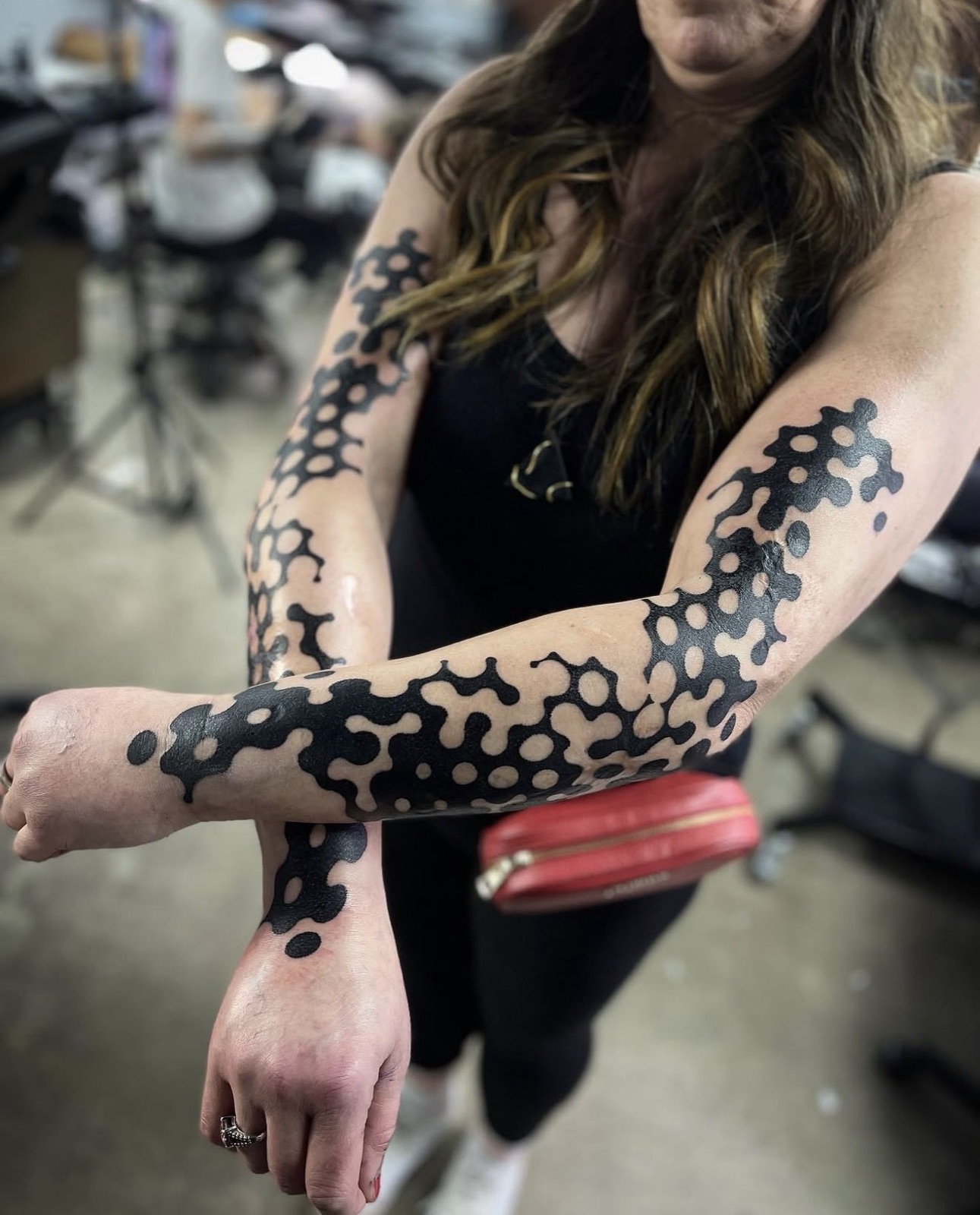
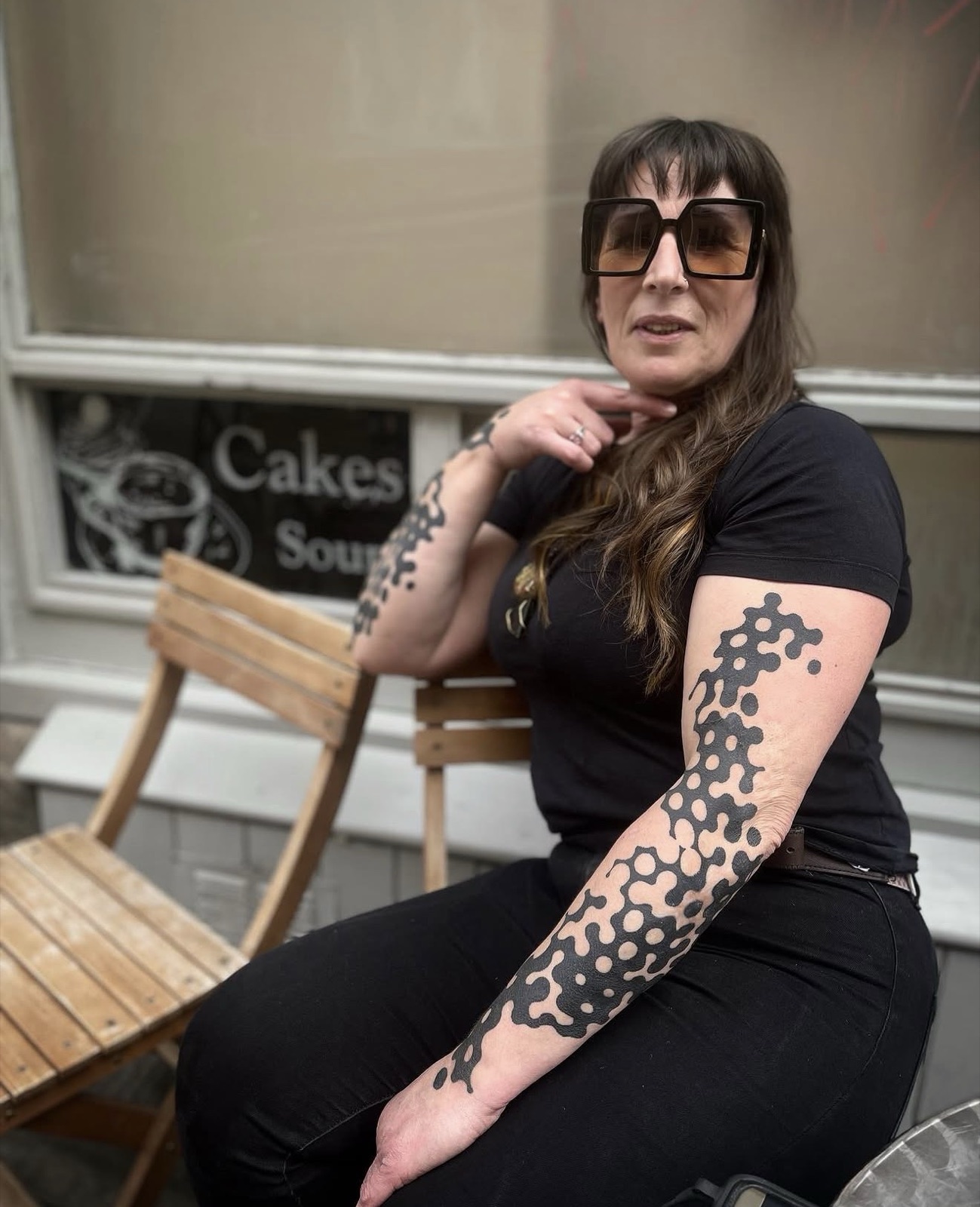
A few years ago I covered some scars for a client who'd been through a traumatic time. She hadn't worn short sleeves in over 15 years. We turned it into a piece she loved, and a while later I saw her in town, sitting outside a cafe with her arms out, first time in over 15 years. The way she was holding herself was completely different.
Not everyone who comes to me has a story like that. Plenty of people just got bored of an old tattoo, or fancy a change. All of those are good enough reasons.
About half my work now is cover-ups, and it's one of my favourite things to do. You come in with something you've stopped liking and you leave looking different. People stand differently after. I like being part of that.
It's not always old tattoos, either. I cover scars too.
"Cover-up" actually covers a few different approaches. This post runs through the three I do, so you know what you're dealing with before you message me.
Three ways to cover up an old tattoo
There's more than one way to deal with a tattoo you've gone off. These are the three I do.
- Full cover-up, a new tattoo designed to completely hide the old one. Done well, you'd never know anything was there.
- Blast-over, a bold new design over the old one, with bits of the old tattoo still showing through. You're building over it, not hiding it. The old tattoo stays part of the piece instead of being buried. It's the one I rate most.
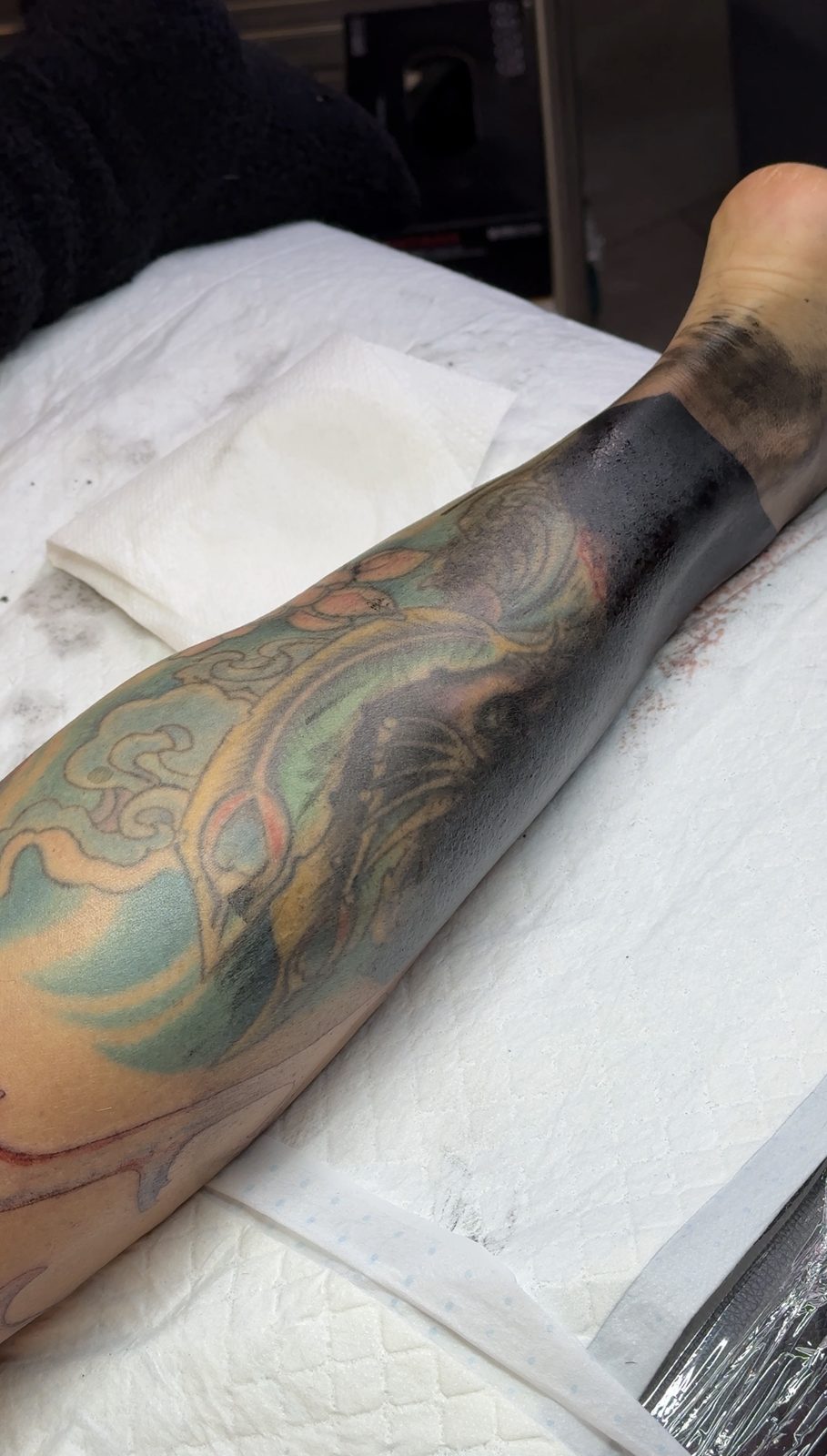
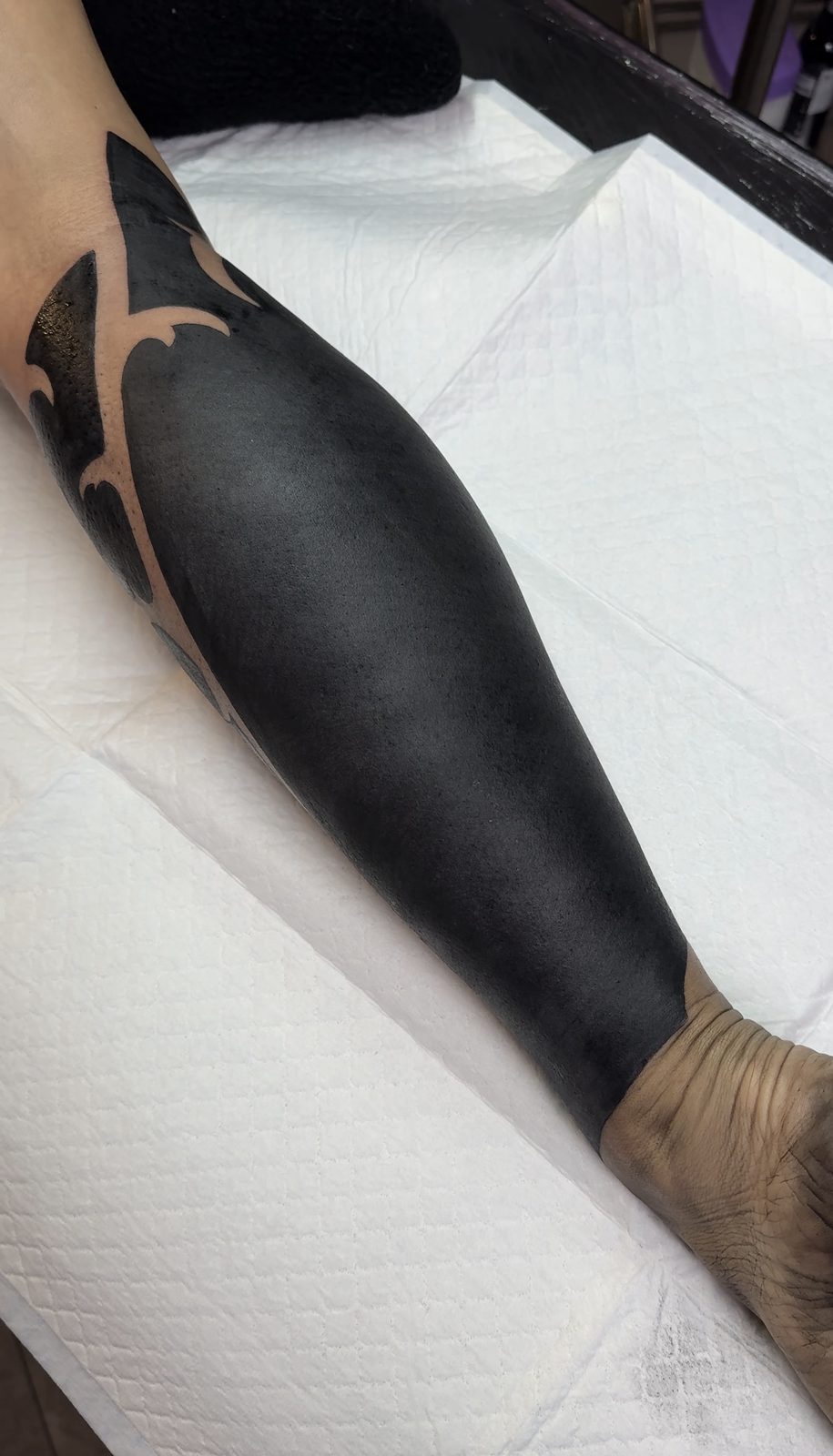
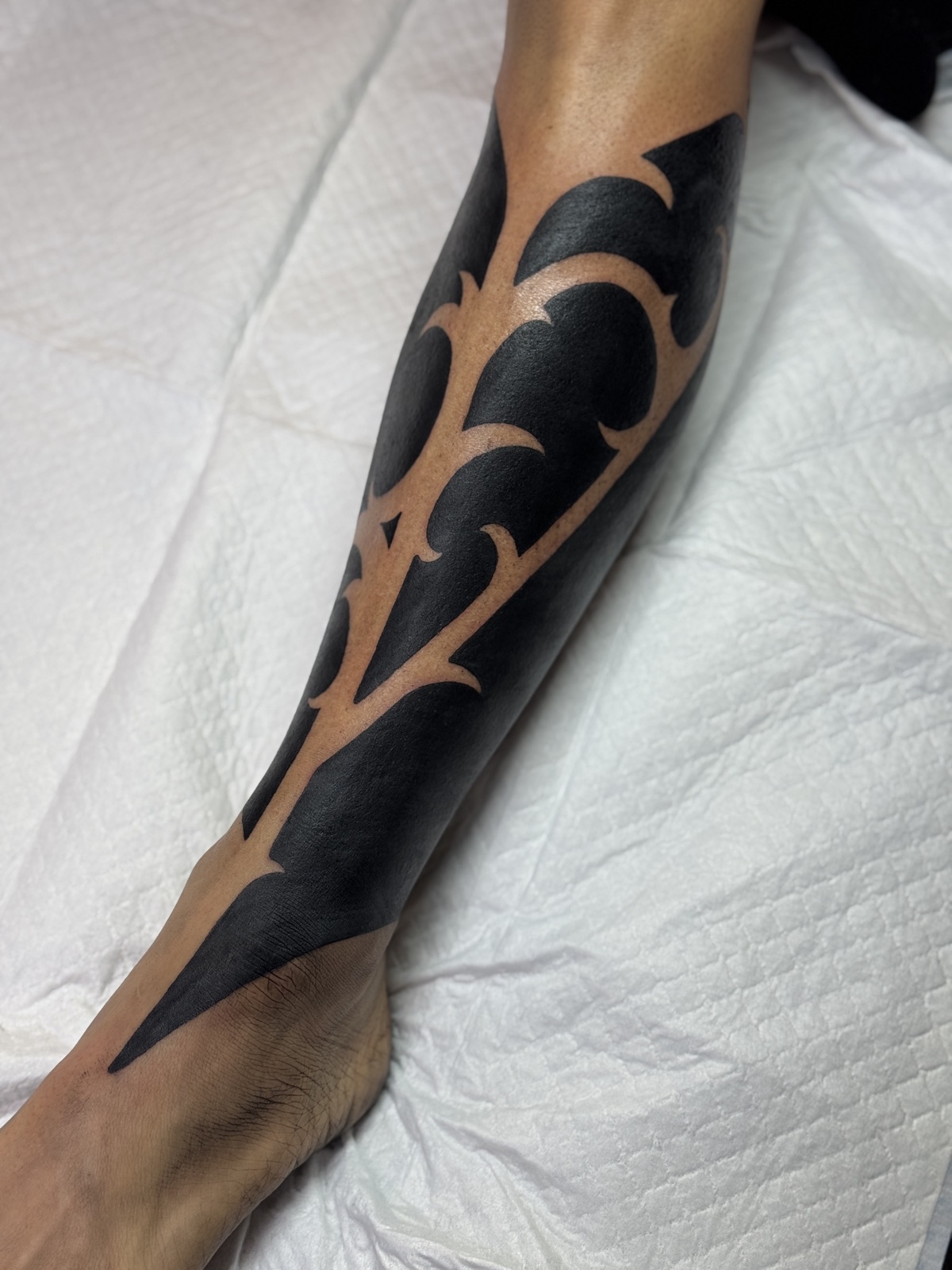
- Blackout, a whole area packed in solid black, burying everything underneath. It's a proper style on its own, and it covers anything.
Which one's right depends on what you've got, what you want, and how flexible you are. We work that out in a consultation.
How a full cover-up works
The old ink doesn't disappear. It's still in your skin. A full cover-up works by putting a new design over the top that's darker and bolder than the old one, so the old work sits hidden underneath.
Two things worth knowing:
- It needs to be a bit bigger. The new design has to be slightly bigger than the old one so it covers all of it, including the faded edges that spread over the years.
- Dark covers dark. You can't put a pale design over a solid black tattoo and expect it to show. The new work has to be darker than what's already there. That's what blackwork is built for, so a heavy old tattoo suits me fine.
How I actually do it
A lot of it I design on my iPad first, then do plenty of it on the body, on the day.
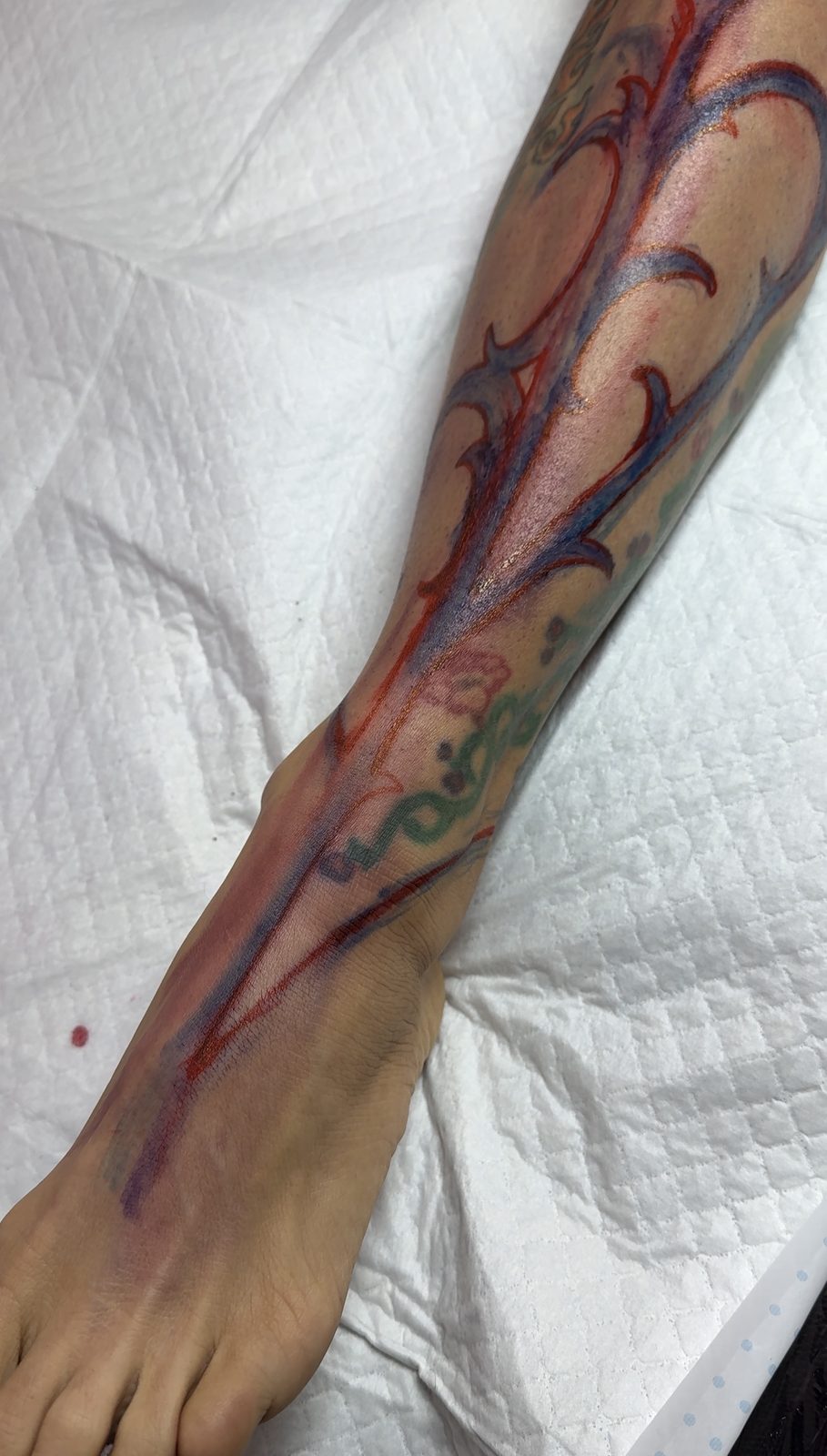
Geometry I always stencil, because it has to be exact. The flowing, organic shapes, clouds, neo-tribal, that kind of thing, I draw freehand on the skin with a sharpie. Often I'll stencil my iPad design on first, then adjust it on the body, adding extra stencil bits or drawing more on by hand until it sits right over the old tattoo.
Doing it on the day is the part that makes a cover-up work. I can shape the black to sit over exactly what needs covering and flow with your arm or leg, instead of being locked to a design before I've even seen the old tattoo in the flesh.
What's a blast-over, and is it for you?
A blast-over is a bold new tattoo over your existing one, with the old work still partly showing through underneath. Sounds backwards, but done right it looks really good, and no two come out the same.
It's a good fit if you:
- want something bold and new and you don't mind the old tattoo still being there in some form
- are running out of skin and want to build on what you've got
- have grown out of your old tattoo and want something bolder over it
It's not for you if you can't stand the idea of the old tattoo showing at all. Then a full cover-up or a blackout is the way, because those hide everything.
The good part for me is the freedom. With a blast-over I'm not building the whole design around hiding something, so I can just focus on making the new piece look its best. It's the work I enjoy most.
A good example is a chest I did for Jon. Underneath was an old colour Japanese tattoo covering the whole chest. We went over it with blackwork clouds and a big geometric mandala in the middle. You can still catch the old work in places, and it looks better for it.
See Jon's blast-over come together on Instagram:
Do you need laser first?
Depends on the look you're after.
If you don't mind the old tattoo still showing behind the new work, like with a blast-over or a full blackout, you don't need laser at all.
If you want a clean result with nothing showing through, say a mandala straight over the top, then the old tattoo needs lasering down first.
So it comes down to your final look. For anything about the laser side itself, talk to a laser specialist. Either way, send me a photo when you enquire and I'll tell you which route you're looking at.
What about a blackout?
A blackout covers a whole area, an arm, a leg panel, a full sleeve, in solid black. Everything underneath gets buried.
It's a strong look, but you need to know a few things first:
- It's one of the harder tattoos to sit through and heal, with real swelling and a longer recovery.
- It's hard to undo. Lasering a blackout off later is difficult and expensive, so don't rush the decision.
- It takes skill to pack black solid and even without overworking the skin. Not every artist should be doing big blackouts.
My advice: if you're only thinking about a blackout to get rid of something, let's talk through your other options first. If you love the look of solid black for its own sake, it's a great choice and I'm your guy.
How cover-ups heal
Honestly, a cover-up heals like any other tattoo. I haven't noticed any difference between healing over an old tattoo and healing on fresh skin, and it's the same with the tattoos I've got on myself. Same aftercare as anything else.
Go to the right artist
The most common cover-up I get asked to do is fixing someone else's. Usually the new tattoo was too light, so the old one still shows through underneath and it ends up looking like a mess.
Covering an old tattoo properly is its own skill, and not every tattoo artist does it. Before you book a cover-up anywhere, do your research. Look at the artist's healed cover-up work, not just fresh photos, and make sure they actually know how to bury old ink rather than just tattoo over the top of it.
What happens at a consultation
No need to be nervous, it's just a chat. You show me the tattoo, tell me roughly what you're after, and we work out the best route.
Handy to have:
- any laser history, if you've had some (how many sessions, when)
- a rough idea of what you want, even a few saved images
- an open mind, the more flexible you are, the more options you've got
I'll look at the size, how dark it is and where it sits, whether laser would help, what works over it, and whether it's one session or more. And I'll tell you straight. If what you've got in mind won't work over the old tattoo, I'll say why and show you what will.
If another artist's told you it's impossible, get a second opinion. Tricky cover-ups are a specialism, and blackwork artists are usually well set up for them.
What it costs
Good news: a cover-up costs the same as any other tattoo with me. There's no cover-up surcharge. My work's efficient and I get a lot done in a session, so covering an old tattoo doesn't cost more than a fresh one the same size.
Most of my clients book two or more full-day sessions anyway, because they're after a proper transformation, not a quick patch. If you do go for laser fading first, that's a separate cost paid to the clinic, not to me.
Thinking about a cover-up in Bristol?
If you've been sitting on a tattoo you've gone off, the first step is just a conversation. I work from a private studio in Clifton, and cover-ups are half of what I do.
Send me a photo and tell me what you're thinking, and we'll work out the best route together, whether that's a full cover-up, a blast-over, a blackout, or a mix of them.
Send me a photo and tell me your idea · see my work · more on my cover-ups and blast-overs · book a consultation
Common questions
Can any tattoo be covered up?
Almost all can be covered or built on. Some get hidden completely, others work better as a blast-over. Very dark, heavy old work might need lasering down first for a full cover. A consultation tells you what's possible with yours.
What's the difference between a full cover-up and a blast-over?
A full cover-up hides the old tattoo completely. A blast-over goes over it on purpose and leaves bits of the old one showing through. Blast-overs give more freedom, but you've got to be alright with the old work still being there.
How big will my cover-up need to be?
Only a bit bigger than the original, just enough to cover all of it including the faded edges.
Will you be able to tell it was a cover-up?
Done well, no, you won't see the old tattoo once it's settled. One thing to know: if the old tattoo was scarred, where you can feel the raised lines, you'll still feel that texture under the new work even though you can't see it. That's only if the old one was scarred.
Do I need laser removal first?
Not always. If you don't mind the old tattoo showing through, like a blast-over or blackout, you don't. If you want nothing showing, it needs lasering down first. It comes down to the look you're after, and for laser questions speak to a specialist.
Does a cover-up hurt more?
It can, especially if the old tattoo's recent or there's scar tissue. Skin that's been tattooed before tends to be more sensitive. It varies person to person.
Can you cover scars?
Yes, I do a lot of scar cover-ups. The main thing is the scar needs to be properly healed and settled first, so not fresh. I'd usually want it at least a year or two old before covering it.
How long does a cover-up take to heal?
About two to three weeks, the same as any tattoo. I haven't found cover-ups heal any differently.