The outer arm or forearm, if you want the easy answer. It's the most comfortable place to start.
But that's not really the question. The one worth answering is what your long-term plan is with tattoos.
And be ready for that to change. Every single client I've tattooed has come back for more. Lots of first-timers tell me this is their only one, and then they come back to add to it. That's natural. With your first one you don't know what to expect, because how could you?
For some people a tattoo is a transformation. For others it's an accessory, like a nice handbag, and there's nothing wrong with that. Most of my clients come to me for the transformation.
The best places for a first tattoo
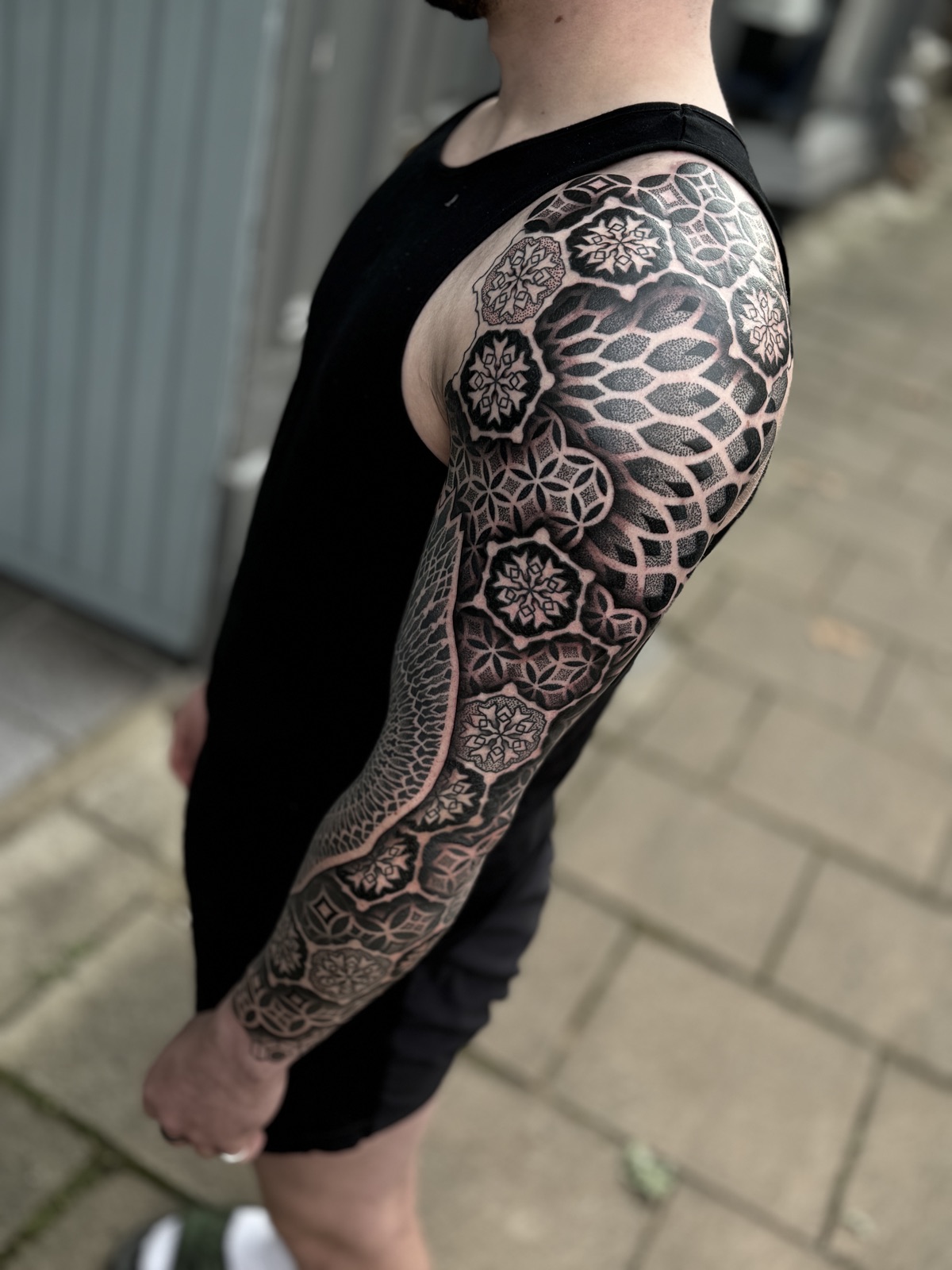
The outer arm and forearm. The outer thigh and calf are kind too. If you're nervous, those are the best spots to start, and you build up from there.
The forearm and outer arm are also the sensible places to begin if you think you might want a sleeve one day, because they can grow into one. More on that below.
The spots to avoid for a first one
Hands and fingers. I've got mine done and the detail just disappears, unless you go really bold. Anything near the palms you have to dig really deep for it to stay, and it's painful.
The sternum is bony and sharp. The inside of the upper arm isn't nice. The top of the shoulder, the sides of the elbow and the back of the knee get nearly everyone. The elbow itself is usually softer than people fear.
And definitely not your face. I've had enquiries to tattoo a face as a first tattoo and I've said no. I'm not here to judge anyone, but if you want a face tattoo as your first one, sit with it for a year first. Or maybe just don't.
I've written a full guide to where a tattoo actually hurts, with real accounts from over a hundred people, if you want the whole map.
Tom wanted a ring around his wrist
Tom came in at 27 for his first tattoo. He wanted a band running around his wrist and down into his middle finger. Filigree, ornamental flowers, an eye. A lot of meaning behind it.
Two problems, and neither was the idea. He'd packed too much into one small piece, and the wrist is a rough place to start. Filigree is fine detail, and fine detail is exactly what fades on hands and fingers.
So I asked what else he had. We talked about where it could sit and what his arm might look like in a few years, and he ended up with a lower arm tattoo instead. At the end of the day he told me he was glad he'd taken the advice, because he could imagine it being a lot worse somewhere else. He left wanting more tattoos.
I will tell you if I think your idea is bad. Most people coming in for a first tattoo don't really know what they want yet, and how could they? That's what I'm here for, and it's how every tattoo artist should work. We're here to help with your idea and form it into a tattoo you'll be happy to wear on your skin, and one I'm proud of.
Tom's whole first tattoo is on my YouTube, from the consultation to the finished piece, if you want to see how it actually goes: What getting your first tattoo is actually like.
Think about the whole arm, not the piece
This was most of my conversation with Tom, and it's the part people skip.
If you want a sleeve eventually, a random small piece becomes patchwork you have to work around. If you start with something that flows the right way, with the muscle rather than against it, it grows into a sleeve properly.
So before you pick a spot, ask what you want that whole arm to look like later. Patchwork, or one piece? There's a lot to think about and it gets overwhelming, and that's what I'm here for. Don't rush the decision.
Your first tattoo can be a big one
Most advice online says start small and work up. That's not how it works with me. Almost everyone I tattoo comes in for big work, a full sleeve, a full back or a full leg, and plenty of them have never been tattooed before. I do about one small tattoo a year, usually as a side project. Gosia, who I share the studio with, does the smaller pieces.
Laura's first tattoo is a full bodysuit. She thought about it for thirteen years before she booked. Ben's first tattoo was a geometric sleeve, six sessions, and we started that one with two days back to back as well.
Dylan's first tattoo ever was a full sleeve. Japanese geometric patterns with floral elements running through it and a chrysanthemum explosion in the middle. Four and a half sessions to finish it. We started with two days back to back, which sounds like a lot for someone who's never been tattooed:
"I came today knowing what to expect. It made it a little bit easier, and I think if I had waiting time after yesterday, I maybe would have been more nervous about coming back. Actually just getting it done, and seeing the progress you can make in two days."
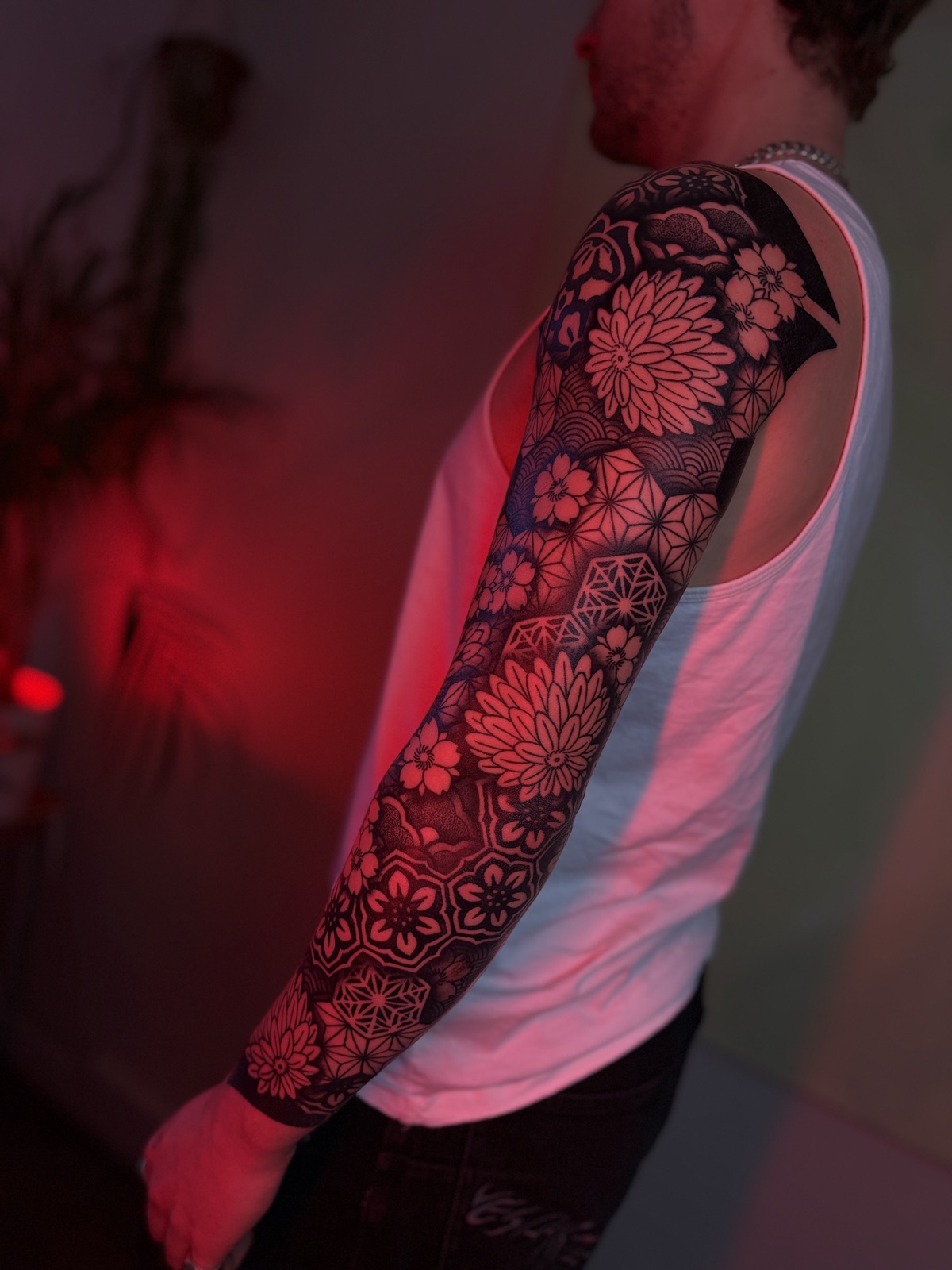
That's why I like starting a sleeve that way. There's no gap to sit and dread the next one, and you see real progress fast. By the end he put it better than I could:
"In between each session, it was like having a whole new tattoo. You get used to what you've got and you really start to sort of like it, and then a whole other layer gets added, and it changes everything."
You don't need to know how long it'll take
This is the bit that scares people off, and it shouldn't.
Laura is three sessions into her bodysuit with another six booked. How many in total? We don't know. She's completely fine with that, because she understands a project that size takes the work it takes.
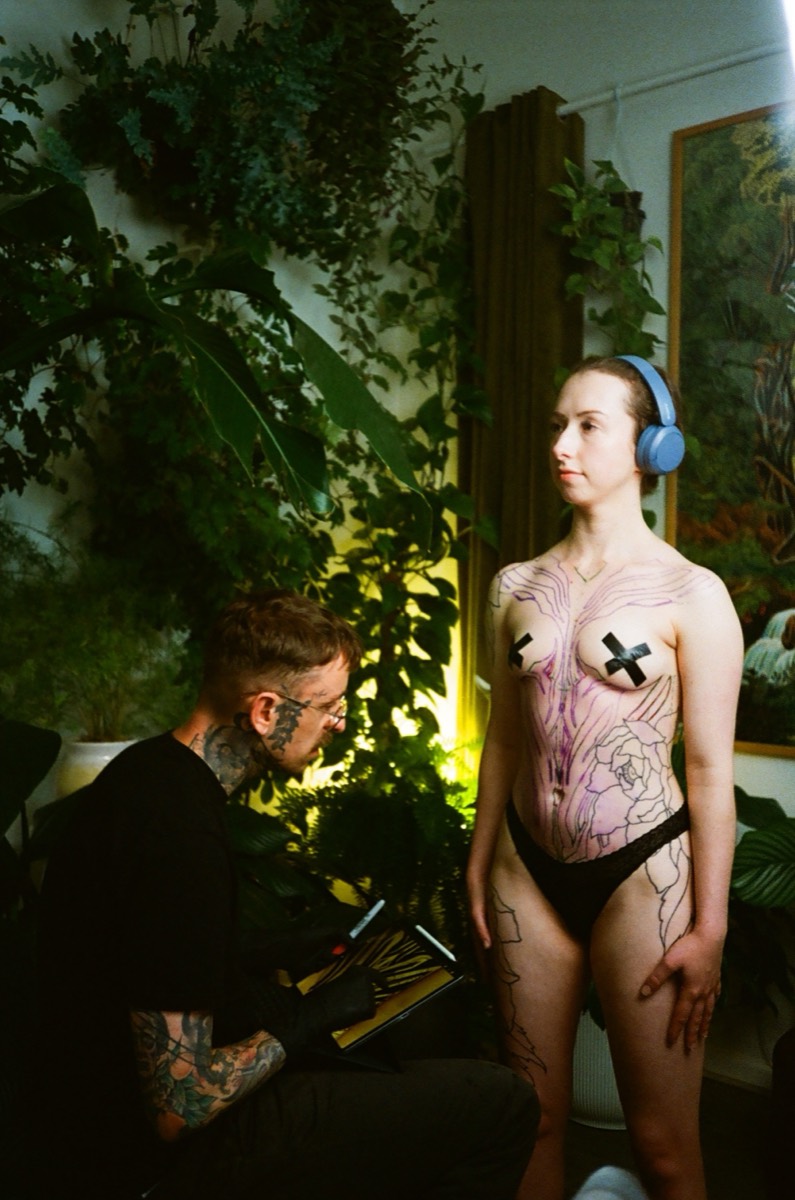
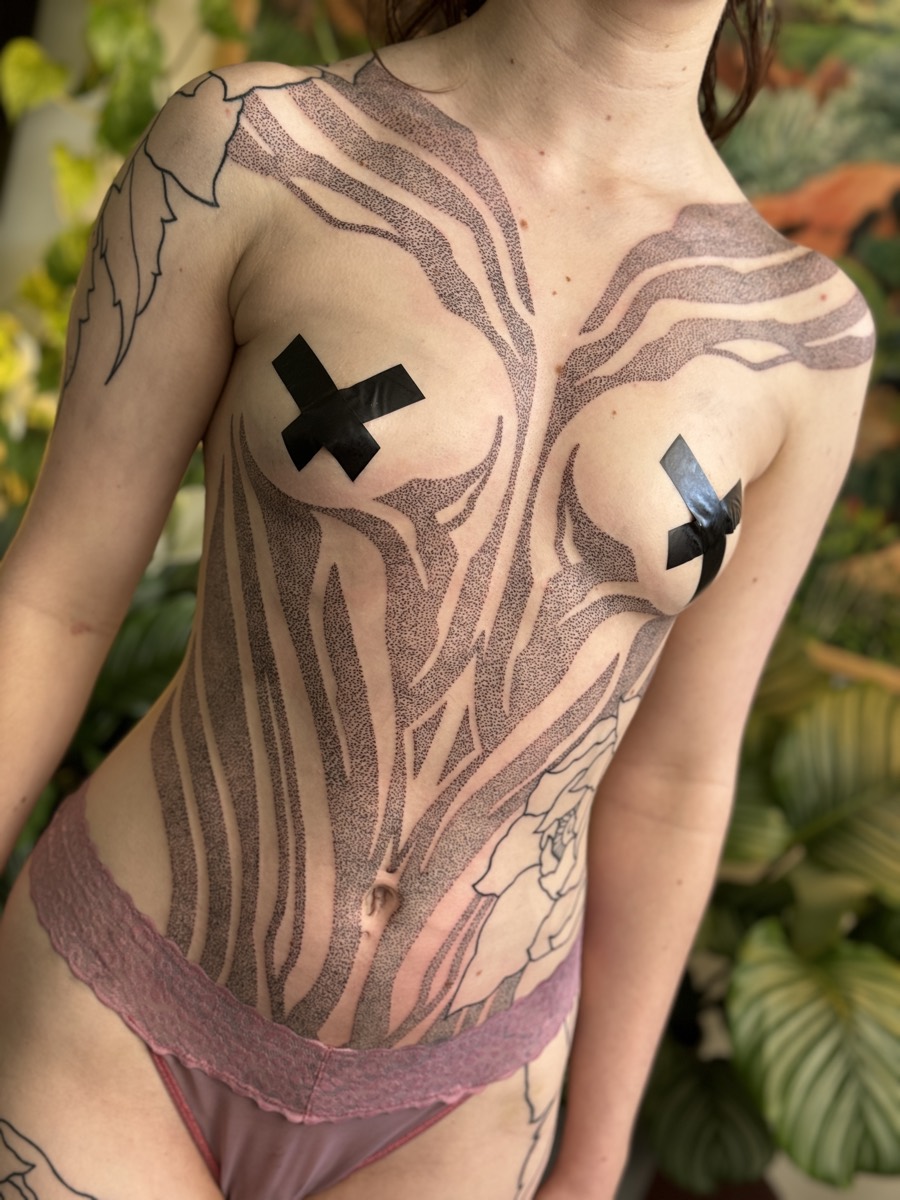
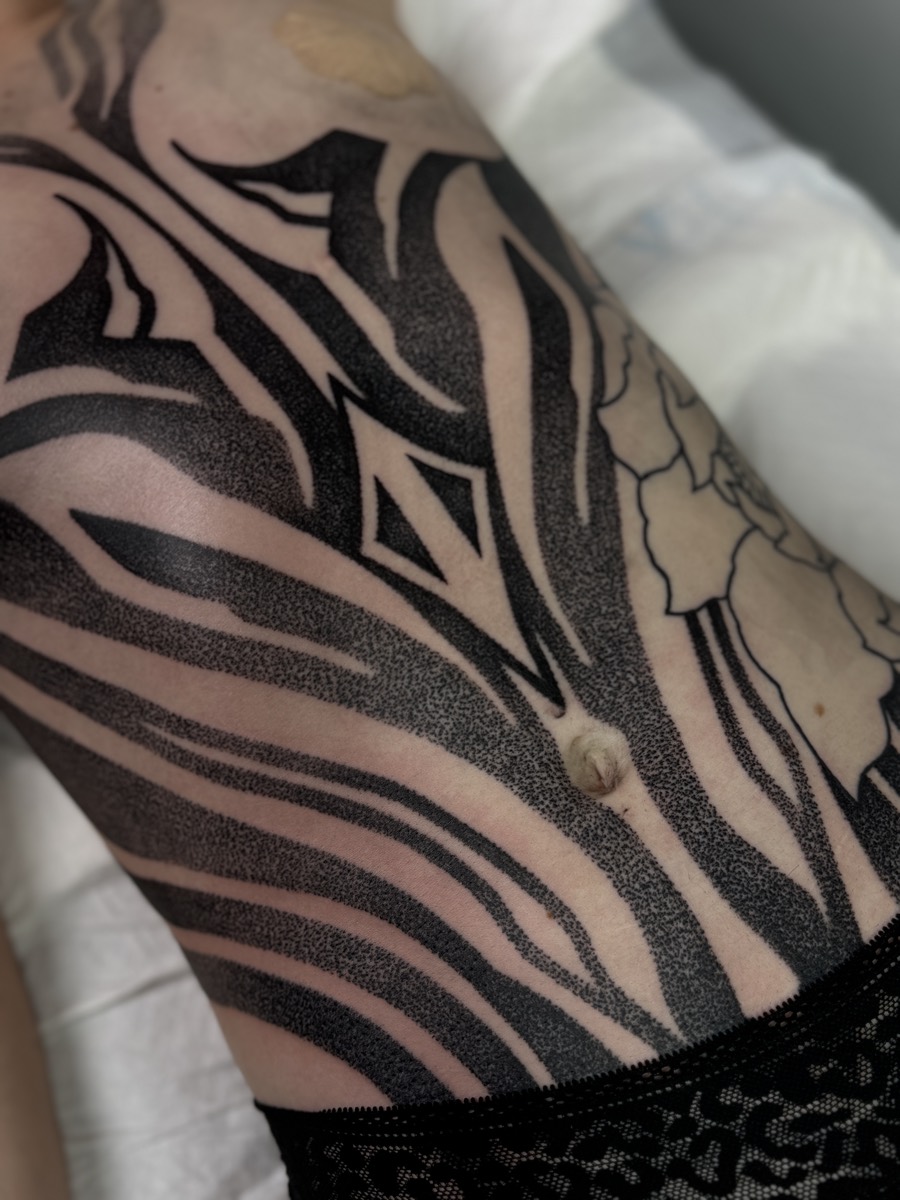
Her bodysuit also went on hold for about a year when life got busy. A couple of months ago she got in touch to say she was ready again, so we booked six sessions straight away. It happens like that sometimes. Life has different priorities, you put a big project on hold, then you pick it back up.
Don't overcomplicate it
The other thing first-timers do is try to fit everything in. Every idea, every detail, all the meaning, all in one piece. Put too much detail into a small tattoo and it won't hold up. The details just disappear as it ages.
If you've got something really meaningful you want in there, talk to me about how many of those elements can actually work. Everyone's different. I usually recommend three, because three is a good number for composition.
And you don't have to pick anything meaningful at all. It can be purely aesthetic, with nothing behind it. That's how I work a lot of the time. People just like the way it looks, and that's it.
Some people load a tattoo with meaning and some don't, and I like both. The meaning is for you. My job is to create the visual form out of your idea.
What it actually does
For most people getting a big tattoo, it marks a significant moment in their life. Their appearance changes, and it changes how they hold themselves.
And that's magic.
Want to talk about a tattoo?
I do blackwork and geometric work from a private studio in Clifton, Bristol, sleeves, backs, blackouts, cover-ups and blast-overs. If you're planning a first piece, book a free consultation or take a look at the work. I'm always happy to help.
Common questions
Where is the best place to get your first tattoo?
The outer arm and forearm are the most comfortable place to start. The outer thigh and calf are kind too. But the placement matters less than knowing what you want long term.
Where should you not get your first tattoo?
Your face. I've said no to that one. If you want it, sit with the idea for a year first. After that: hands and fingers, where the detail fades unless you go really bold, and near the palms you have to work very deep for the ink to stay. The sternum and the inner upper arm are also rough places to start.
Does the placement of a first tattoo matter for later?
Yes. Most people don't stop at one. A random small piece becomes patchwork you have to work around later. Something that flows with the muscle grows into a sleeve properly.
Can your first tattoo be a full sleeve?
Yes. A lot of mine are. People wait years, save up and arrive ready for a big project. One client's first tattoo is a full bodysuit.
How many ideas should go in a first tattoo?
Everyone's different, so talk to your artist about how many of your elements can actually work. I usually recommend three, because three is a good number for composition. Put too much detail into a small tattoo and it won't hold up. The details just disappear as it ages.
Is two days in a row too much for a first tattoo?
Most first-timers say it's easier. There's no gap to sit and dread the next one, and you see real progress fast.