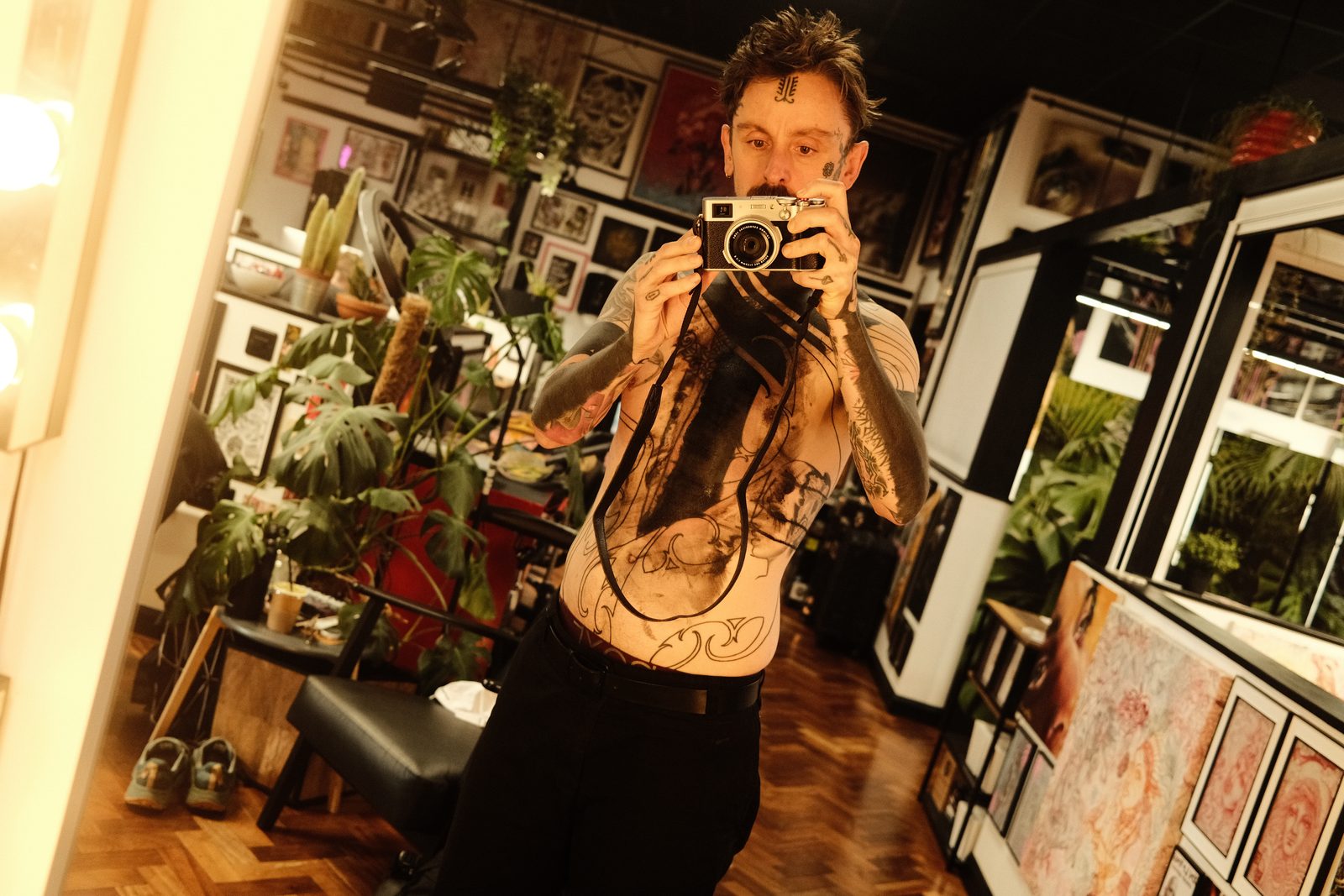
A blackout is an area of the body covered completely in solid black. No design inside it. A forearm, a full sleeve, a leg, a hand, a chest. I've done a lot of them, I've got them on my own body, and this is everything people ask me before they book one.
Why people get them
Two reasons, and often both at once.
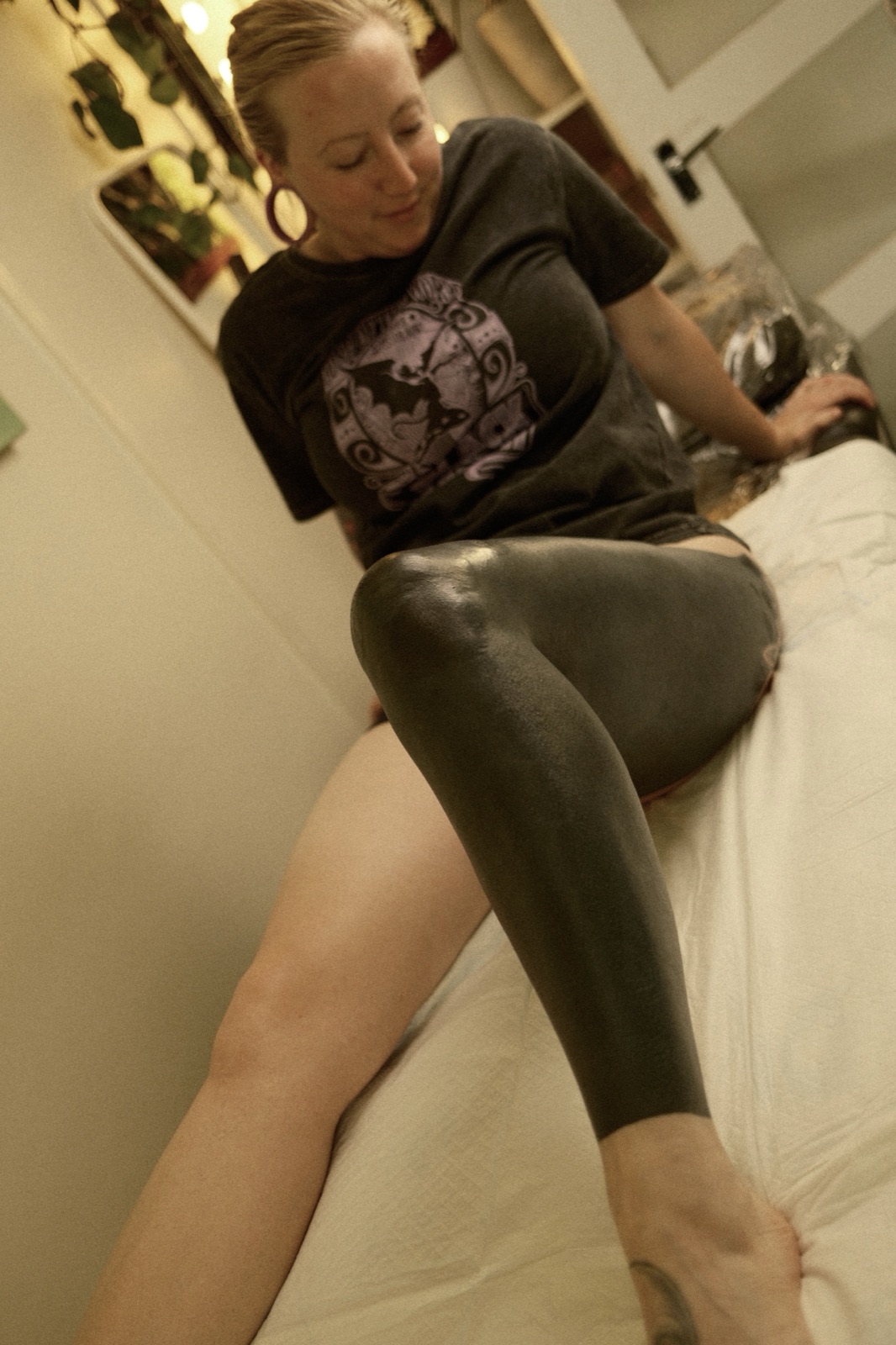
The first is old tattoos. Dark covers dark, so a blackout buries heavy, dense or messy old work more reliably than almost anything else. Jess came to me with a leg full of work she'd grown out of. She looked into laser first. It would have cost a lot of money and taken years. A blackout took one full day and one half day.
The second is the look. Solid black on skin is bold, it ages really well, and it changes how people carry themselves. Jess told me afterwards it gave her confidence she never thought she'd have. She bought a whole new wardrobe. I hear versions of that a lot.
Is it for you?
Blackout gets a lot of attention online, and a fair amount of it is people who regret theirs. So think about it properly.
Every other tattoo can be covered with something darker. There is nothing darker than solid black, so nothing covers a blackout. Laser struggles with it too. It's the final boss of tattoos. So choose it because you love the look, not only as a quick fix for something you hate.
Jess put it well when I asked her what she'd say to someone thinking about it: really think about the reason why you're doing it. Think about what it feels like on the inside and how it's going to make you feel.
If you're not sure, that's what the consultation is for. I'll be straight with you about whether a blackout, a blast-over, or a designed cover-up is the better call for what you've got. My guide to cover-ups and blast-overs goes through the options.
What it feels like
It's a lot of solid black in one area, so it's harder to sit through than a small piece. Some placements are worse than others. On my own body, the wrist and the elbow ditch were the worst. The neck is overrated, it was easier than my arm. The jaw was sore because it's bony, and bony spots always are.
It's manageable. Most people tell me the same thing when they get out of the chair: painful, but fine. The way I keep it manageable is by not doing it all in one go, which brings me to sessions.
How many sessions
I do blackouts in half days, on purpose. Packing a big area solid is hard on the skin, and spreading it over shorter sessions gives the cleanest, most even black and the easiest healing. Blackout sessions are never back to back. The skin needs to heal in between.
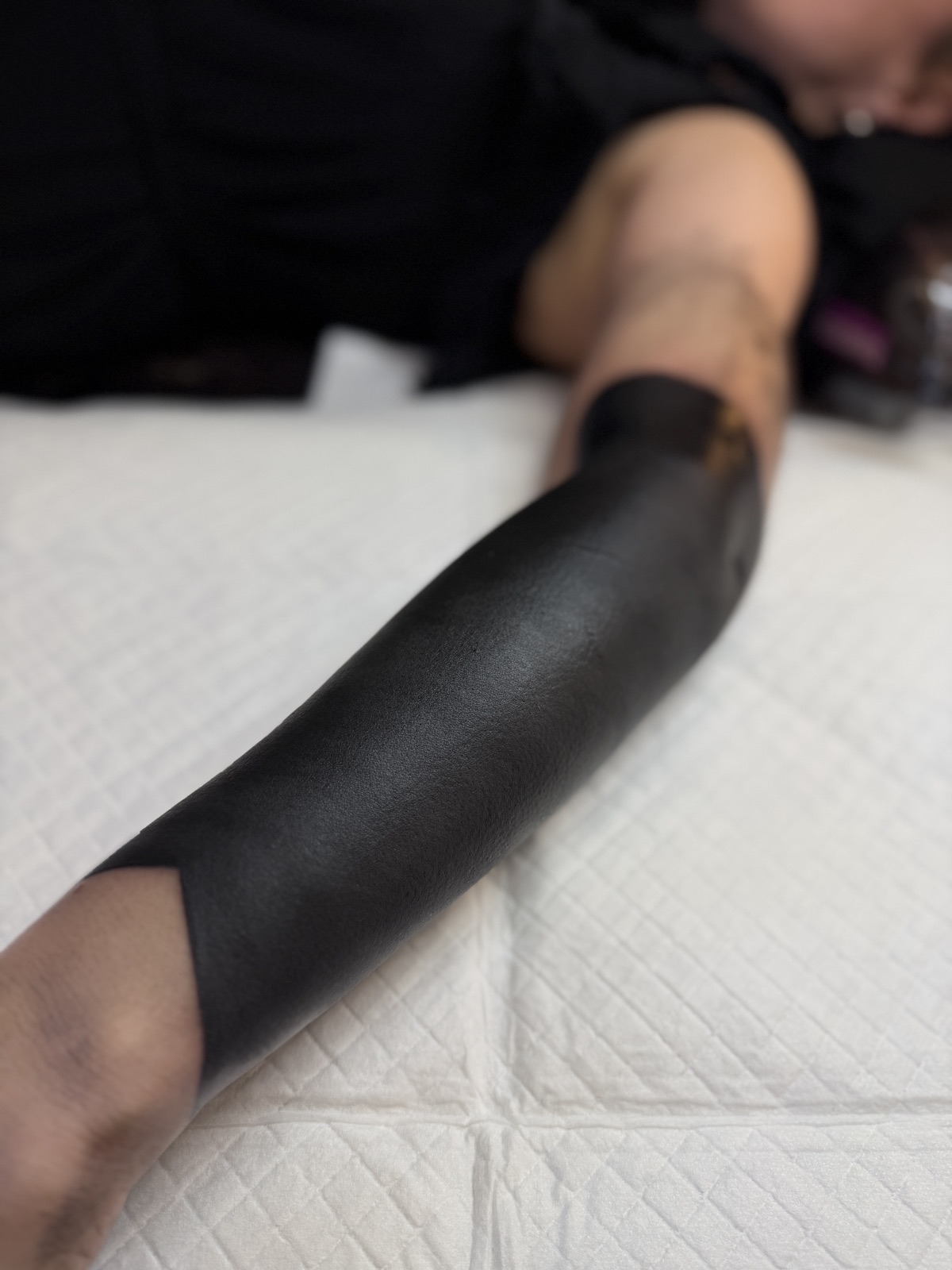
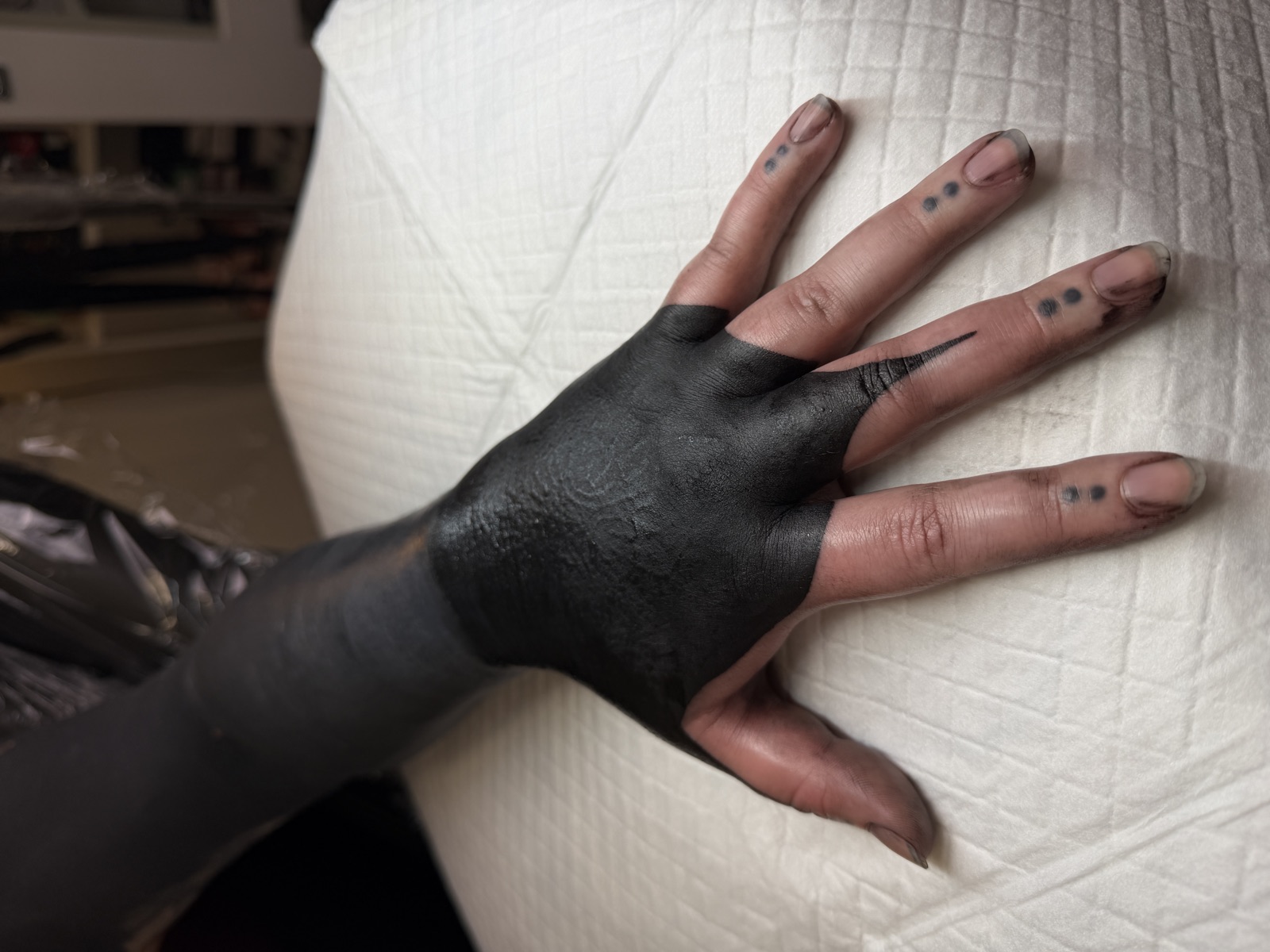
Real numbers from my own work. A full sleeve is usually three or four half days. Smaller areas are quicker:
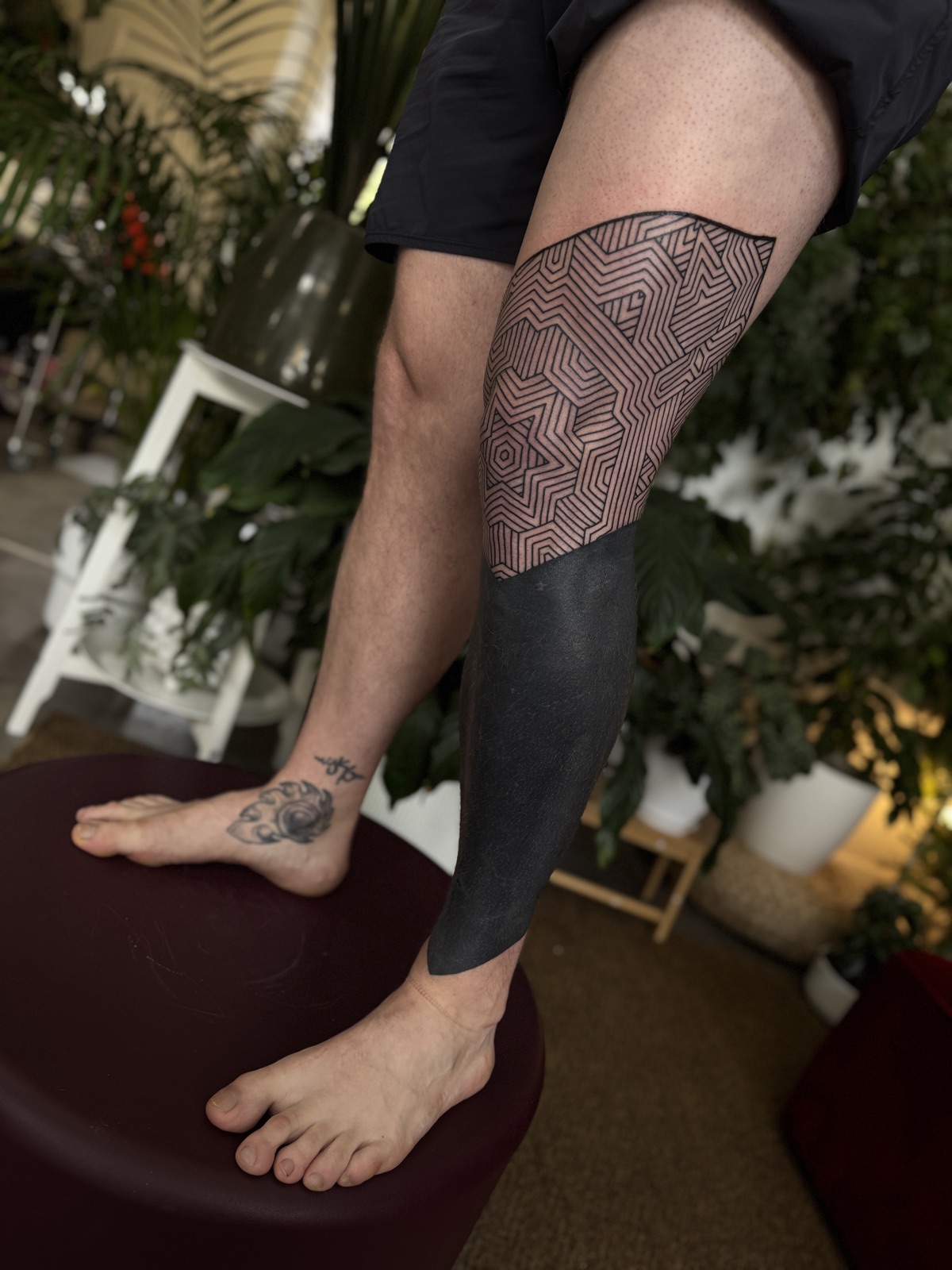
Jess's full leg, at the top of this page, was one full day and one half day.
You'll see the big celebrity blackouts talked about in hours. Chris Daughtry's arms took around forty hours over seven days. That's the nature of a big blackout, every inch has to be packed solid and even. I wouldn't do one in a single sitting, and I wouldn't let a client talk me into it either.
How the cost works
I work to fixed full-day and half-day session rates, and I send them to everyone who enquires, before we talk. The total for a blackout is the number of sessions the area needs. A forearm is one half day. A sleeve is three or four. There's no hidden quote at the end.
A deposit secures the booking. It isn't an extra cost, it carries over and comes off your final session. You only ever pay for the sessions you actually have.
If you want the sessions guide for other kinds of work, it's here: how many sessions does a blackwork sleeve take.
How it heals
Honestly, this is the part to take seriously. A blackout is a big open wound while it heals. It swells a lot in the first few days, a hand or a forearm can look twice the size, and then it flakes everywhere while it peels. About two weeks to healed, and the skin stays fragile for a couple of weeks after that.
I dry heal blackouts. Clean and dry for the first days, no moisturiser until it starts flaking, then a tiny amount. Keep it out of the sun. No gym or swimming until it has fully peeled with no open skin.
The one thing I tell everyone before they book: take at least four days off after a blackout session. Going back to work too soon is the mistake people make, and it's the one that ruins healing. Eat well, rest, drink water with electrolytes, and let the skin do its thing.
The full day-by-day routine, with my own videos of my own healing, is in the aftercare guide.
Over old tattoos
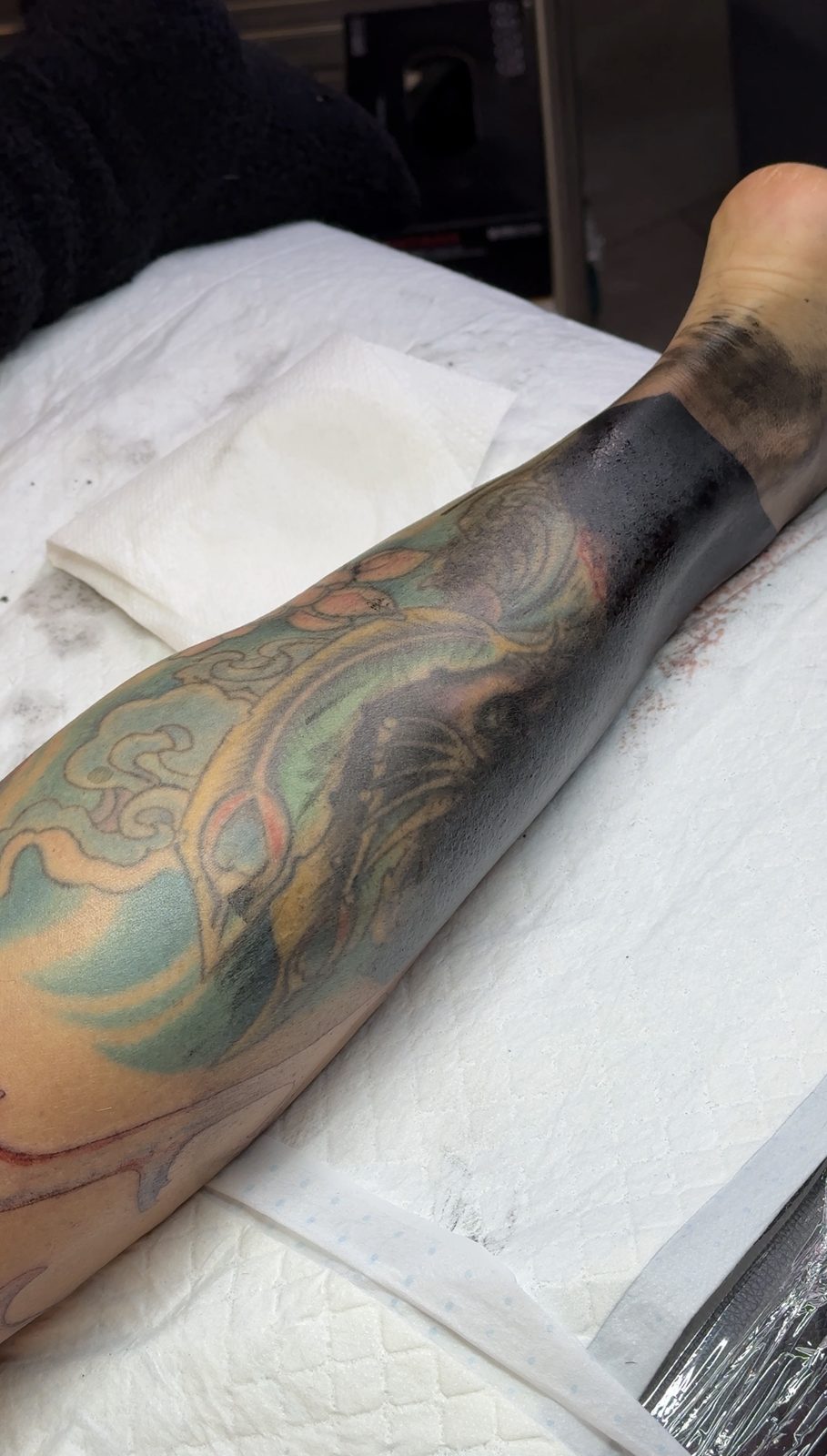
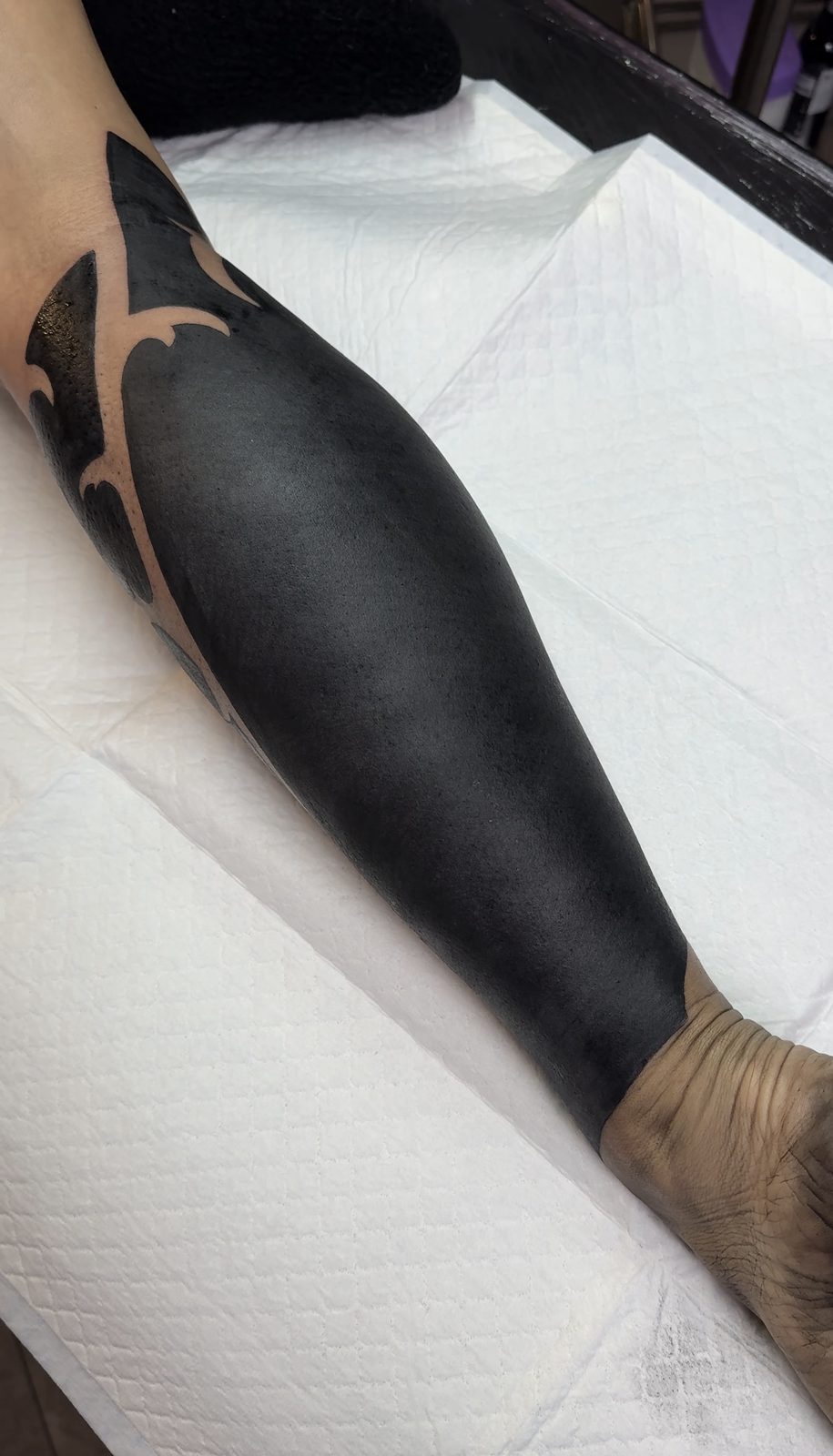
A blackout over an old tattoo heals the same as one on fresh skin. I've watched it on clients and on my own arms and there's no real difference. What matters is that the black is packed solid and even, so the old work doesn't ghost through. A too-light job where the old tattoo still shows is the most common cover-up mistake I see, so look at an artist's healed blackouts, not the fresh photos.
What can go on top
Two options if you don't want plain black. White ink can go over healed black, and there's a particular way to do it to get the result people want, which I go through in the chair. Or detail is left as bare skin inside the black, negative space, which I like a lot. On a heavy torso piece I added floral and ornamental shapes as negative space and it worked much better than filling it. Both are on the table at the consultation.
Next step
Send me a clear photo of the area, and if it's a cover-up, of what you've got. I'll tell you honestly what's possible. Consultations are free, on the first two Saturdays of each month, at the studio or over video. More on the blackout page.
Common questions
What is a blackout tattoo?
An area of the body covered completely in solid black ink, with no design inside it. A forearm, a full sleeve, a leg, a hand, a chest. People get them for the look, and to bury heavy old tattoos they no longer want.
How much does a blackout tattoo cost in the UK?
It depends on the area and how many sessions it needs. I work to fixed full-day and half-day session rates, and I send them to everyone who enquires. A forearm is a half day. A full sleeve is usually three or four half days. You only pay for the sessions you actually have.
Does a blackout tattoo hurt more than a normal tattoo?
It is a lot of solid black in one area, so it is harder to sit than a small piece. On my own body the wrist and the elbow ditch were the worst, the neck was easier than people expect. Splitting it over sessions keeps it manageable.
How long does a blackout tattoo take to heal?
About two weeks to healed, then the skin stays a bit fragile for a couple of weeks after that. It swells a lot in the first days and flakes heavily while it peels. Take at least four days off work after each session.
Can you remove a blackout tattoo?
Treat it as permanent. Solid black is very hard to remove with laser. If you are not sure, a blast-over or a designed cover-up might suit you better, and that is what the consultation is for.
Can you tattoo over a blackout?
Yes. White ink can go over healed black, and detail can be left as bare skin inside the black, which is called negative space. I go through both options at the consultation.